
Biochar & Carbon Removal
WE OWN THE PLANTS, THE PROCESS AND THE CARBON.
From feedstock to verified carbon removal, we control the entire value chain delivering durable climate impact at scale.
100 TPD
Current Capacity
~310 TPD
Under Expansion
1.0m~t/yr
Indicative Removal Potential
WHAT WE SUPPLY
BIOCHAR, AND THE BDURABLE CARBON REMOVAL THAT COMES WITH IT.
Biochar is produced from paddy straw at plants owned and operated by Bequest. The material and the carbon removal originate in the same reactor, on the same site, under the same operating company.
THE FEEDSTOCK
BUILT.
TESTED.
BEING STANDARDISED.
Our 100 TPD line has been installed and commissioned by our own engineering team. Trial runs are complete and successful, with product testing and quality standardisation now being finalised from the trial data.
100 TPD
Biochar production line
PLANT INSTALLED
TRIAL RUNS SUCCESSFUL
PRODUCT TESTING COMPLETED
STANDARDISATION UNDERWAY
THE OPPORTUNITY
INDICATIVE CARBON-REMOVAL POTENTIAL
0.33
CO e per tonne of biomass
~1.0
million tCO,e per year (at scale)
~100
million 100,e over 10 years
These are indicative figures, besed on expected feedstock avalasity, plant utization and carbon content. Actual results may very besed on openting conditions and thed party verification
OUR Stand
WHERE THE LINE STANDS
A clear, controlled process that turns agricultural residues into durable carbon removal.
Rising Emissions
Global emissions continue to climb, and reductions alone won't be enough.
Limited Removals
Current carbon removal solutions are far behind what's needed.
Growing Demand
High-quality, durable removals are essential for a net-zero future.
Our Focus
Scaling biochar to bridge the gapwith real plants, real processes, and real impact.
HOW IT WORKS
STRAW IN. BIOCHAR OUT.
TODAY’S REALITY,
TOMORROW’S RESPONSIBILITY.
THE FEEDSTOCK
WE TAKE WHAT IS LEFT AFTER THE HARVEST.
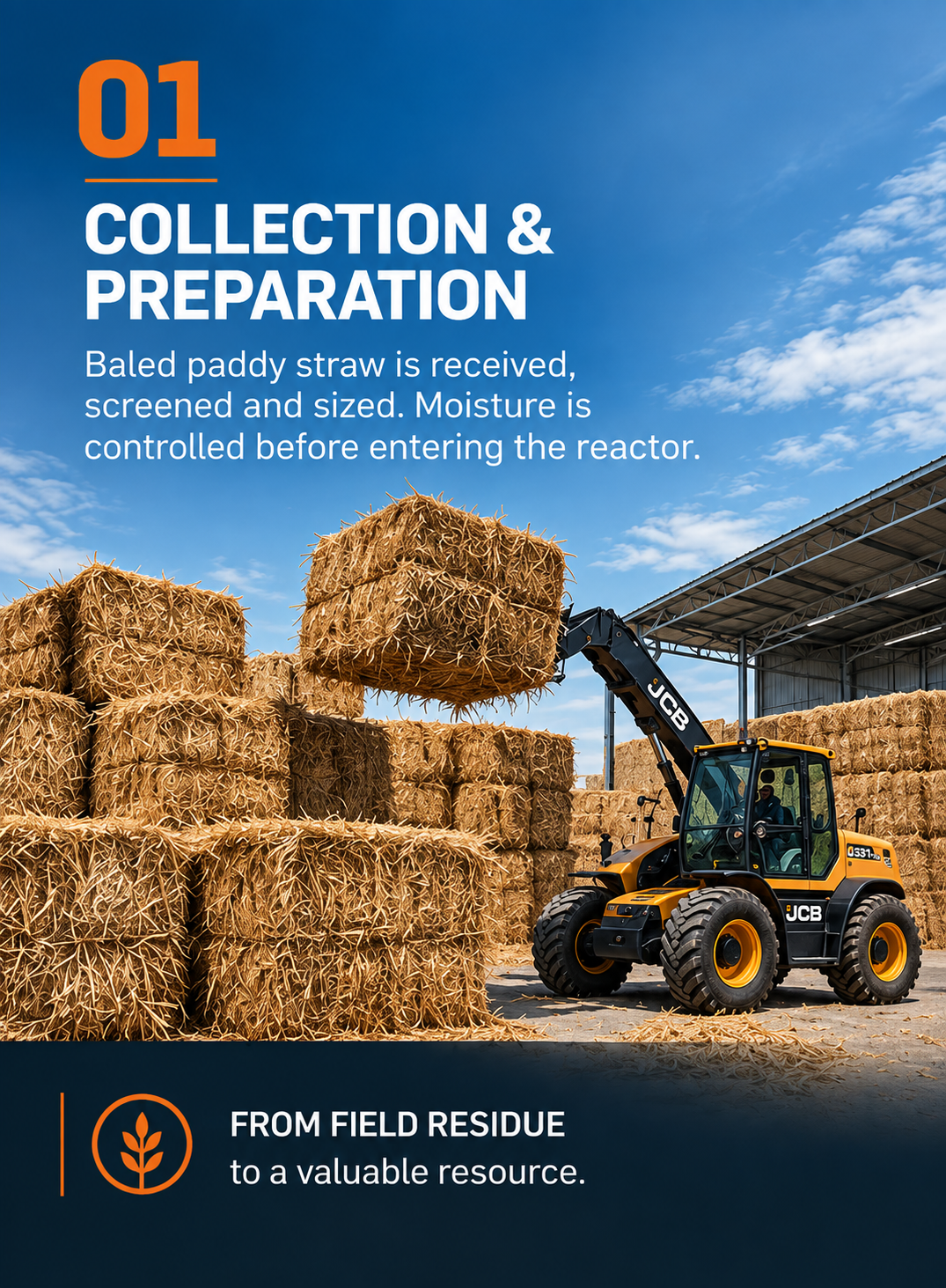
Paddy straw is an agricultural residue — the material left after the rice crop has been harvested. Instead of treating it as waste, Bequest uses it as the feedstock for its biochar process.
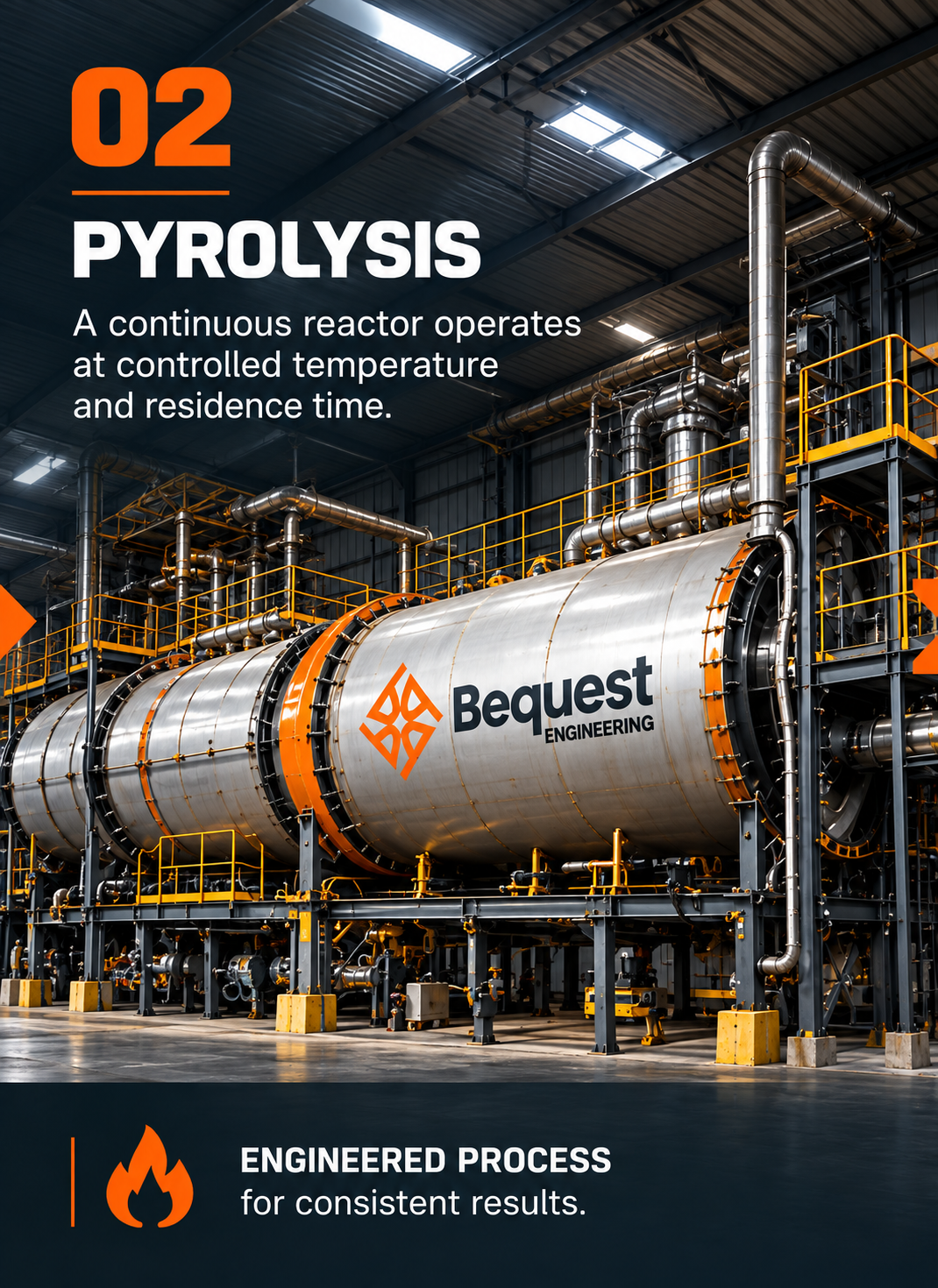
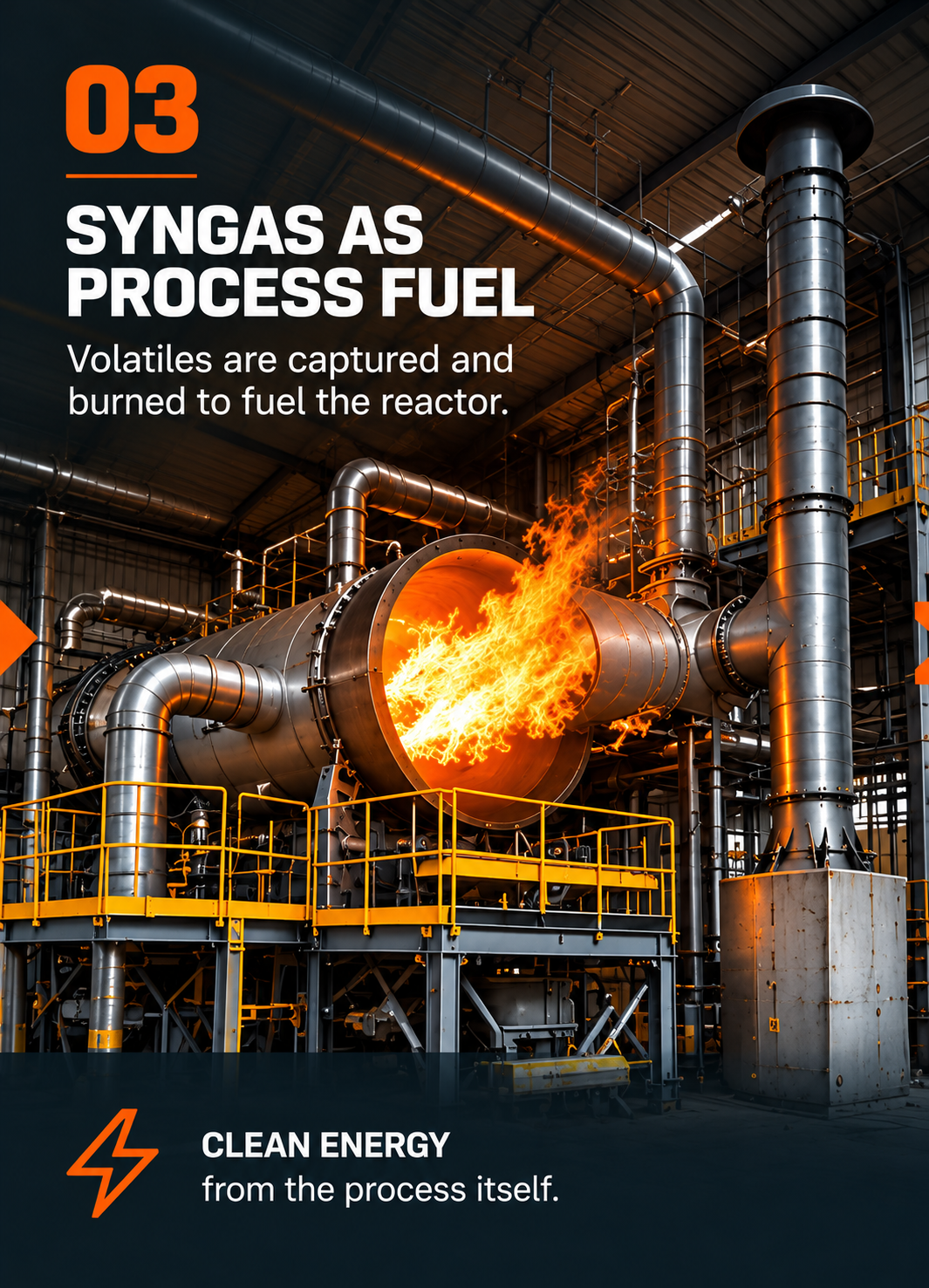
The straw is collected, prepared and moisture-controlled before entering the reactor, where controlled pyrolysis converts the biomass into a stable, carbon-rich material.
- Paddy Straw
- Preparation
- Pyrolysis
- Biochar
- Soil Application
CARBON REMOVAL
CARBON THAT STARTS IN THE FIELD.
ENDS IN THE SOIL.
Net removal depends on carbon stored in the biochar less emissions associated with collection, transport, processing and application. Only the durable organic-carbon fraction is creditable, and Bequest does not describe anything as verified until a registry has verified it.
PADDY STRAW
Agricultural residue collected and prepared for processing.
PYROLYSIS
A continuous reactor operates at controlled temperature and residence time.
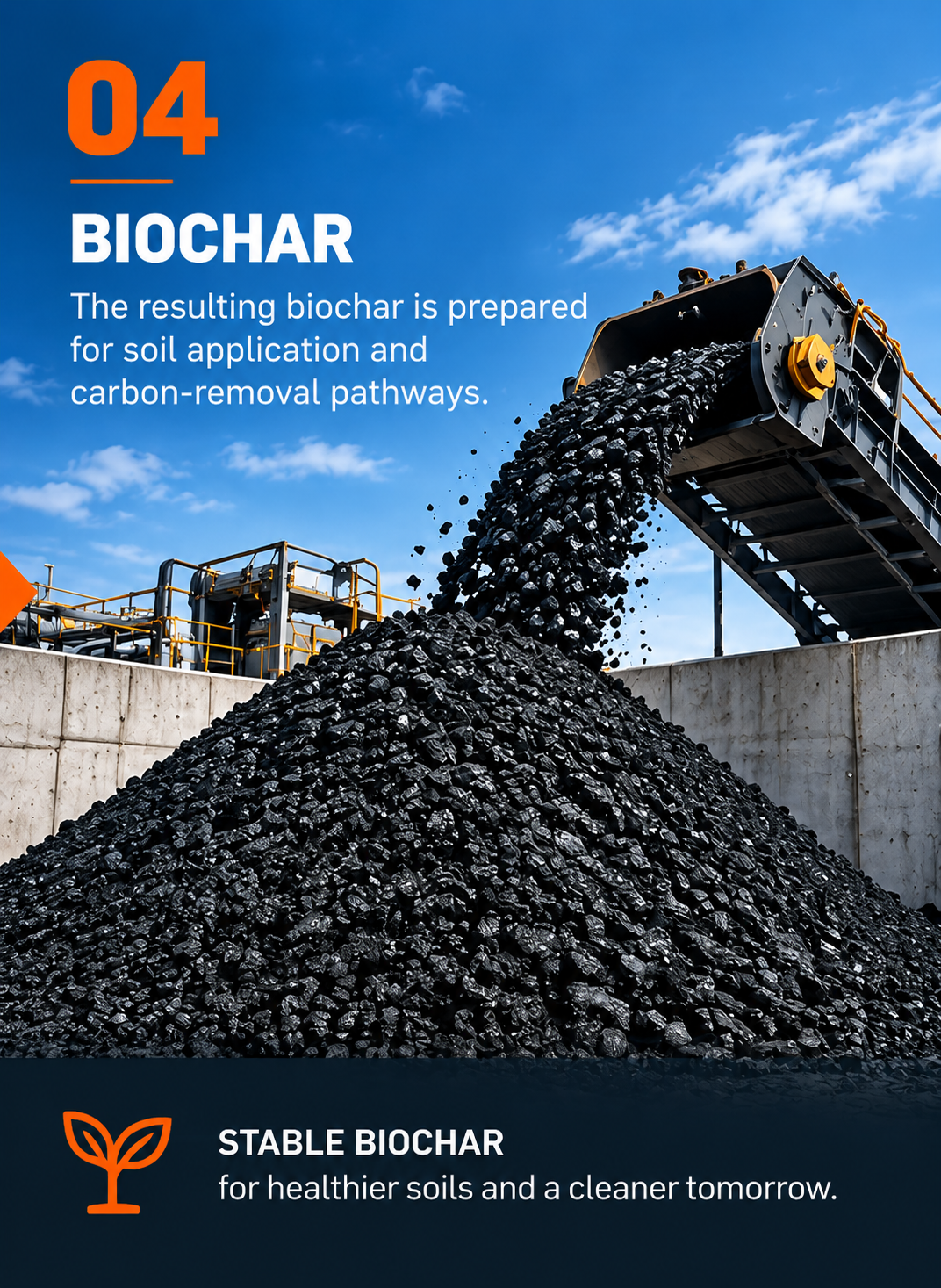
STABLE BIOCHAR
Carbon-rich material produced from the pyrolysis process.
SOIL APPLICATION
Biochar is prepared for application across agricultural soils.
DURABLE CARBON STORAGE
Carbon is stored in stable biochar through long-term soil application.
ONE COUNTERPARTY. ONE CHAIN OF CUSTODY.
From feedstock to biochar to carbon removal — everything stays under one roof, one operating company, and one accountable chain of custody.
OWNED PLANT
The plant is owned and engineered by Bequest.
OWNED LAND
The project operates on land held by the same group.
OWNED PROCESS
The engineering and operating knowledge sits within the group.
WHAT'S NEXT
SECOND LINE
300 TPD
Planned Capacity
+ IN PIPELINE
A second biochar line is planned for installation
once the 100 TPD line commences operation.
Earliest delivery: Q1 2027.
ENGINEERING
Plant designed
and engineered.
INSTALLATION
100 TPD line
installed.
TRIALS
Trial runs successfully
completed.
STANDARDISATION
Input-output ratios and quality
parameters being finalised.
COMMERCIAL OPERATION
Next milestone.
LOOKING FOR DURABLE CARBON REMOVAL?
Talk to us about biochar supply, carbon removal offtake, and future contract volumes.