WE BUILD THE REACTORS. 1,500 TONNES A DAY COME OFF THEM.
Torrefaction machinery designed and fabricated in-house — and a coal-grade fuel made from what was going to be burned in a field.
What torrefaction does
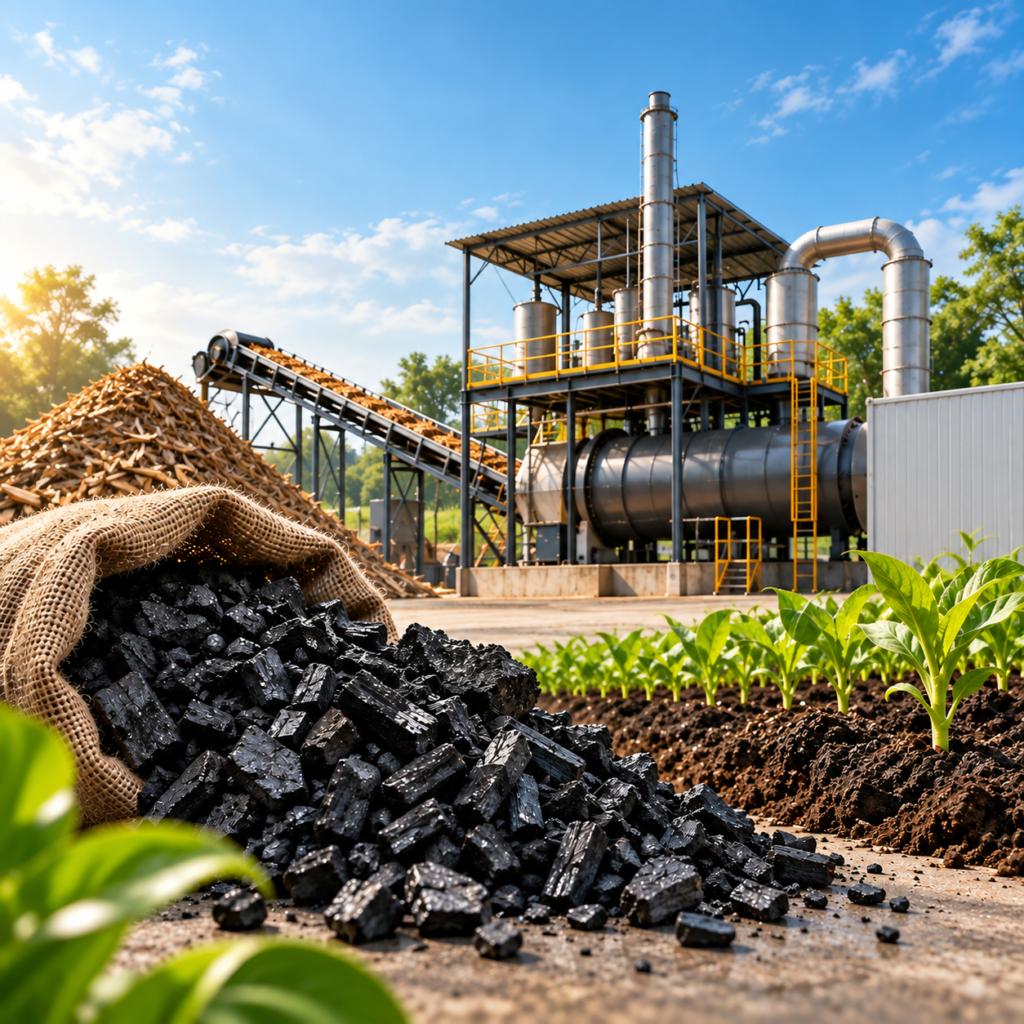
Torrefaction roasts biomass at controlled temperature in the near-absence of oxygen. What comes out is no longer agricultural residue in any practical sense: it is energy-dense, it does not absorb water, it does not rot in an open yard, and it grinds in the pulverisers a coal plant already owns.
Who buys it
Thermal power stations meeting biomass co-firing obligations, cement kilns, and industrial boiler operators in textiles, paper and food processing who are under pressure to decarbonise process heat without rebuilding it.
TWO THINGS, AND THEY ARE WORTH SEPARATING
We manufacture the machinery.
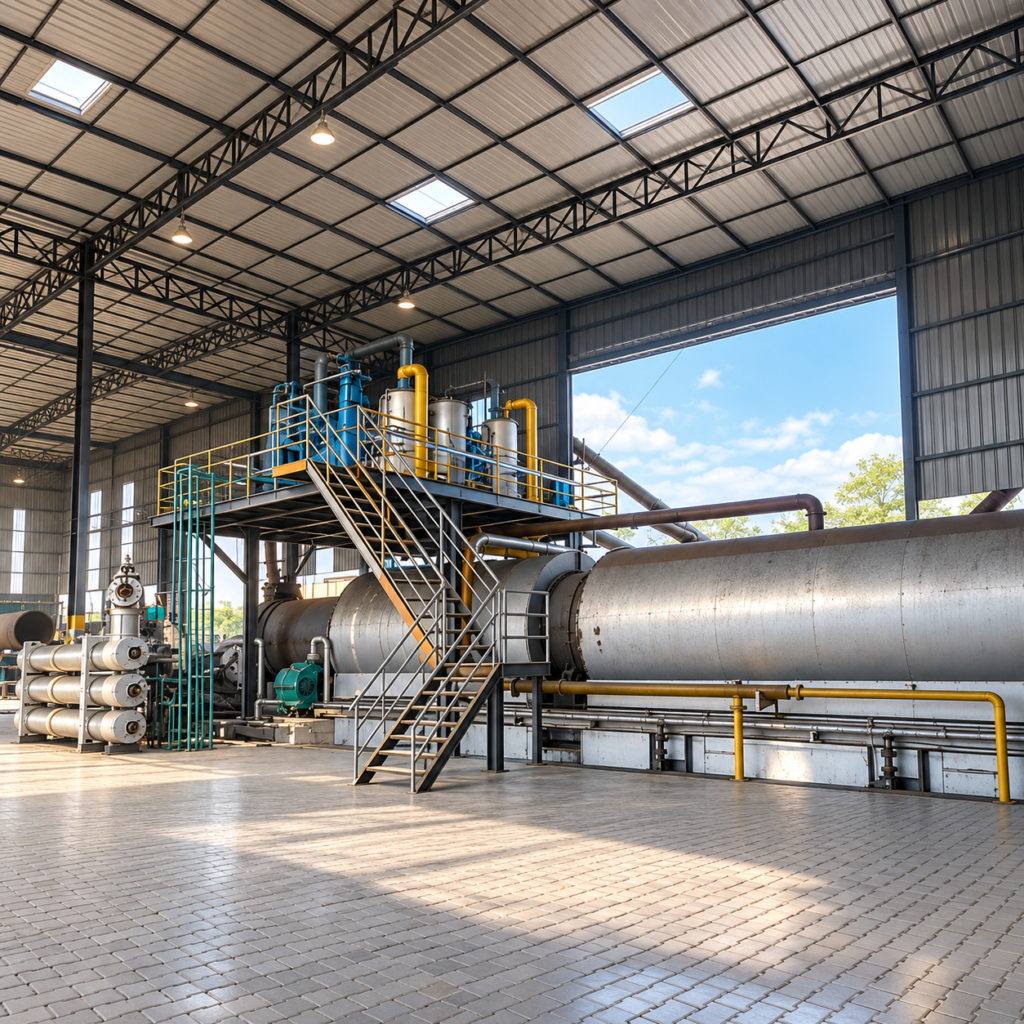
Bequest designs and fabricates torrefaction and pyrolysis reactors — rotary continuous and stationary modular — with heavy fabrication done in-house at Mansa. We are the largest supplier of torrefied-pellet machinery in India.
1,500 MTPD of pellets
Produced on those lines by an associate company.
Feedstock
Paddy straw principally, and the line also runs bagasse, cotton stalks, wood chips and mustard straw. All of it is residue. None of it is grown for fuel.
Bequest operates across three core sectors—Energy & Carbon, Resource Recovery, and Land & Development—bringing engineering, materials and land together through seven focused businesses.
What technologies does Bequest Global specialise in?
Bequest Global specialises in thermal conversion and environmental engineering solutions, including biomass torrefaction, pyrolysis systems, air pollution control systems, and related industrial equipment.
What types of biomass can be processed using Bequest's torrefaction technology?
Our systems can process a range of biomass residues, including paddy straw, bagasse, cotton stalks, wood chips, and mustard straw. The appropriate feedstock and process configuration depend on the required fuel characteristics and operating conditions.
What is the advantage of torrefied biomass over conventional biomass fuel?
Torrefaction improves the energy density, moisture resistance, storage characteristics, and grindability of biomass. The resulting torrefied fuel can be used as a coal substitute or co-firing fuel in suitable industrial and power applications.
Does Bequest Global design and manufacture its own thermal conversion equipment?
Yes. Bequest designs and fabricates torrefaction and pyrolysis reactors, including rotary continuous and stationary modular systems. The equipment is engineered for industrial applications and can be configured according to feedstock, capacity, and process requirements.
Aashish Garg
Founder & Partner
START A CONVERSATION
LET'S BUILD A
CLEANER TOMORROW.
Talk to us about biochar supply, carbon removal offtake, or a torrefaction plant of your own.